As winter brings darker mornings, heavy rain, and increased disruption, school transport safety becomes a top concern for parents and administrators alike. Modern technology—particularly real-time tracking, parent apps, and automated communication—plays a critical role in safeguarding students during these challenging conditions. By providing live visibility, instant alerts, and streamlined communication, schools can significantly reduce risk, minimise delays, and build parent confidence. In 2027, the most trusted school transport systems will be those that combine operational excellence with transparent, technology-driven safety.
Why Winter Changes the School Transport Equation
As May approaches in many regions, schools enter a period of:
- Shorter daylight hours
- Increased rainfall and road hazards
- Greater traffic congestion
- Higher likelihood of delays and disruptions
For parents, this combination creates a heightened sense of concern:
👉 “Has the bus arrived safely?”
👉 “Why is it late?”
👉 “Did my child get on board?”
For schools, winter introduces operational complexity—and a surge in inbound queries.
Without the right systems in place, administrative teams can quickly become overwhelmed.
The Winter Risk Landscape for School Transport
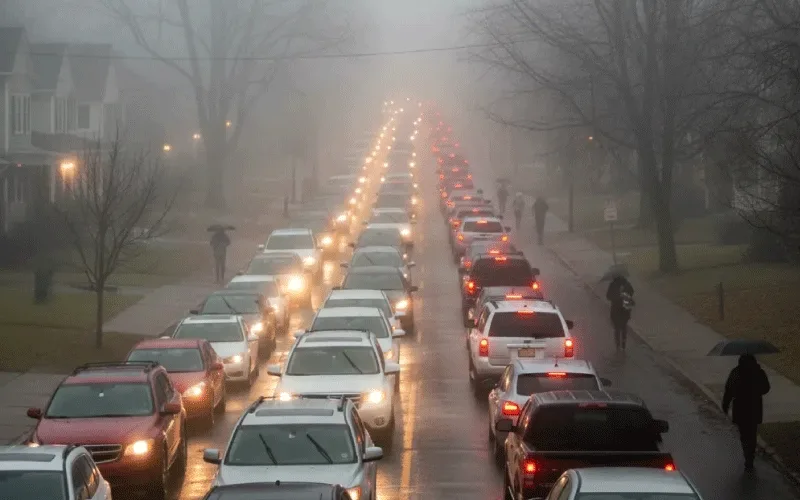
Winter conditions introduce several safety and operational risks that schools must proactively manage.
🌧️ Reduced Visibility
- Darker mornings reduce driver visibility
- Increased risk at pick-up and drop-off points
- Greater reliance on lighting and supervision
🚦 Traffic Delays and Congestion
Wet weather often leads to:
- Slower traffic flow
- Increased accident risk
- Route delays
According to the World Health Organisation, road safety risks increase significantly in poor weather conditions, particularly during low-visibility periods.
📞 Communication Breakdown
Without centralised communication:
- Parents flood school offices with calls
- Staff manually respond to individual queries
- Information becomes inconsistent or delayed
The Rise of “Uberfication” in School Transport
Parents today expect the same level of visibility they receive from apps like Uber.
This expectation has driven what can be described as the “Uberfication” of school transport.
What Does This Mean?
- Live vehicle tracking
- Real-time ETAs
- Instant notifications
- Transparent journey visibility
This shift is not just about convenience—it’s about trust and safeguarding.
Real-Time Tracking: Visibility That Builds Confidence
One of the most impactful innovations in school transport is live GPS tracking.
📍 How It Works
- Parents can see the bus location in real time
- Estimated arrival times update dynamically
- Delays are immediately visible
📱 Parent Experience in Action
Benefits for Winter Conditions
- Reduces uncertainty during delays
- Eliminates the need for repeated phone calls
- Provides reassurance in low-visibility situations
Boarding Notifications: Closing the Safety Loop
Knowing where the bus is only solves part of the problem.
Parents also want confirmation of student status.
✔️ Key Feature: Scan-On / Scan-Off Technology
- Students scan when boarding and exiting
- Parents receive instant notifications
- Schools maintain a digital attendance record
Why This Matters More in Winter
- Dark mornings increase anxiety at pick-up points
- Parents may not physically see the bus arrival
- Real-time confirmation provides peace of mind
Centralised Communication: Reducing Administrative Friction
Winter often exposes the weaknesses of fragmented communication systems.
The Traditional Problem
- Multiple phone calls
- Email chains
- Inconsistent updates
The Modern Solution
A centralised platform allows schools to:
- Send instant broadcast updates
- Notify parents of delays or disruptions
- Provide consistent messaging across all users
Real-Time Delay Alerts: Proactive, Not Reactive
🚧 Why Delays Are Inevitable in Winter
- Road conditions deteriorate
- Traffic incidents increase
- Weather events cause sudden disruptions
The Key Difference: Communication Speed
Instead of reacting to complaints, schools can:
- Automatically notify parents of delays
- Provide updated ETAs
- Reduce inbound enquiries
This shift transforms the experience from:
❌ Confusion and frustration
✅ Transparency and trust
Enhancing Driver Safety and Compliance
Technology doesn’t just support parents—it also enhances driver performance and compliance.
Key Safeguarding Features
- Digital vehicle safety checks
- Route tracking and monitoring
- Driver communication tools
- Incident reporting systems
Why This Matters in Winter
- Increased need for vehicle readiness
- Higher risk of road incidents
- Greater emphasis on compliance
Supporting School Staff: Reducing Pressure During Peak Periods
Winter months often lead to a surge in:
- Parent enquiries
- Route adjustments
- Operational issues
With Technology
Schools can:
- Reduce “Where is the bus?” calls by up to 70–80%
- Automate routine communication
- Focus staff on higher-value tasks
Building Parent Trust Through Transparency
Trust is built through visibility and consistency.
What Parents Want in Winter
- Clear communication
- Real-time updates
- Reliable service
When schools deliver this, they achieve:
- Higher parent satisfaction
- Stronger community trust
- Improved retention
The Psychological Impact: Reducing Parent Anxiety
Winter conditions amplify uncertainty.
Technology helps reduce this by:
- Providing immediate answers
- Eliminating guesswork
- Offering continuous visibility
Research from the National Safety Council highlights that uncertainty in transport situations significantly increases perceived risk for families.
From Reactive Support to Proactive Safeguarding
Old Model
- Wait for issues
- Respond to complaints
- Manage manually
New Model
- Anticipate disruptions
- Communicate proactively
- Use data to improve performance
This is the essence of modern safeguarding.
Integration with School Operations
Advanced transport systems integrate seamlessly with:
- School administration platforms
- Attendance systems
- Communication tools
This creates a single source of truth for transport operations.
ESG and Duty of Care Considerations
Winter safeguarding also aligns with broader responsibilities:
🛡️ Duty of Care
Schools must demonstrate:
- Student safety
- Reliable processes
- Risk mitigation
🌱 ESG Alignment
- Reduced car usage
- Lower emissions
- Safer, more efficient transport systems
Practical Steps for Schools This Winter
1. Implement Real-Time Tracking
Ensure all vehicles are GPS-enabled.
2. Introduce Parent Apps
Provide live updates and notifications.
3. Automate Communication
Reduce manual workload and improve consistency.
4. Monitor Performance Data
Track delays, routes, and utilisation.
5. Train Staff and Drivers
Ensure systems are used effectively.
Looking Ahead: The Future of School Transport Safety
As technology evolves, we can expect:
- Predictive route optimisation based on weather
- AI-driven delay forecasting
- Enhanced parent communication tools
- Greater integration with smart city infrastructure
The direction is clear:
👉 More visibility
👉 More automation
👉 More trust
Conclusion: Turning Winter Challenges into a Strategic Advantage
Winter will always present challenges for school transport.
But with the right technology, those challenges become opportunities to:
- Improve safety
- Strengthen parent relationships
- Reduce operational pressure
The schools that lead in 2027 will not be those that simply manage transport—
They will be the ones who reimagine it as a core part of safeguarding and experience.