The Power of Smarter Bus Route Planning
As schools across Australia prepare for 2026, one of the most impactful ways to cut costs and improve sustainability lies not in cutting services — but in rethinking how they’re delivered.
Bus route consolidation — the process of analysing, merging, or optimising existing school transport routes — can dramatically reduce operating expenses and carbon emissions without affecting student access.
At StudentRide AU, we use data analytics and route optimisation technology to help schools streamline their transport systems. The result? Lower costs, fewer emissions, and safer, more efficient journeys for every student.
1. Understand What Route Consolidation Really Means
Route consolidation isn’t about removing routes — it’s about using data to make them more efficient.
It Involves:
- Identifying underutilised vehicles or duplicate routes
- Reducing unnecessary stops or overlaps
- Combining similar pickup zones or adjacent schools
- Reassigning stops to balance vehicle loads
In practice, consolidation means fewer buses running smarter routes — not fewer students getting to school.
2. Collect Accurate Ridership and Route Data
You can’t improve what you can’t measure. Accurate data is the foundation of any successful transport optimisation plan.
Data to Gather:
- Student addresses and attendance frequency
- Actual daily ridership (not just registered capacity)
- Vehicle mileage, idling time, and trip duration
- Fuel usage per route
StudentRide’s Route Analytics Tool integrates all this information automatically — giving schools a clear picture of where inefficiencies lie.
3. Identify Underperforming or Overlapping Routes
It’s common for multiple routes to serve the same or adjacent neighbourhoods, especially after years of incremental changes.
How to Spot Inefficiencies:
- Two buses passing through the same suburb within 15 minutes
- Vehicles running below 50% capacity
- Routes with excessive dead mileage (travel without passengers)
- Buses returning to depots unproductively
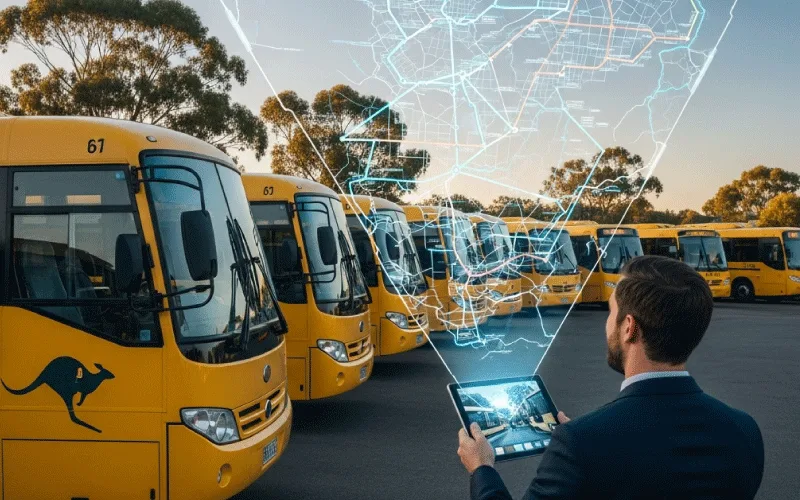
Using StudentRide’s mapping technology, schools can identify overlapping paths and merge them strategically — without sacrificing pickup coverage.
4. Use Technology to Model Cost and Carbon Impact
Digital route planning tools make it easy to simulate different route configurations and visualise potential savings before making changes.
Benefits of Simulation:
- Predict fuel savings from reduced mileage
- Estimate CO₂ reduction per month or term
- Test multiple route scenarios instantly
- Model real-time pickup adjustments
StudentRide’s dashboard gives transport coordinators the ability to make data-driven, environmentally responsible decisions with confidence.
5. Engage Stakeholders Early — Communication Is Key
Parents, drivers, and school staff need to understand why routes are changing — and how the updates benefit everyone.
Best Practices for Communication:
- Send parent information packs explaining the goals and safety benefits
- Hold short briefings with drivers and supervisors
- Use StudentRide’s parent app for route updates and alerts
- Share estimated carbon and cost savings in newsletters
When the community understands the “why,” they’re more supportive of the “how.”
6. Prioritise Safety and Accessibility in Every Change
Route optimisation must never compromise safety. Any change should still prioritise safe pickup locations, supervision ratios, and compliance with state regulations.
Safety Checklist:
- Maintain clear sightlines at pickup points
- Avoid high-traffic or restricted zones
- Confirm drivers have updated route maps and training
- Verify new routes meet Transport for NSW or Victorian Bus Safety Act requirements
StudentRide ensures every updated route meets or exceeds Australian school transport safety standards.
7. Monitor Performance Post-Consolidation
Once new routes are live, continuous tracking is essential to ensure the changes deliver expected savings and service quality.
Metrics to Track:
- Daily ridership vs vehicle capacity
- Time and distance savings per route
- CO₂ emissions before and after consolidation
- Parent satisfaction and feedback
StudentRide provides real-time monitoring and reporting dashboards, allowing administrators to track KPIs and adjust routes as needed.
8. Reinforce Your School’s Sustainability Goals
Route consolidation is more than a cost strategy — it’s a climate-conscious decision that aligns with growing school sustainability programs.
Key Outcomes:
- Fewer vehicles on the road
- Lower fuel consumption
- Reduced CO₂ and NOx emissions
- Enhanced ESG reporting for independent schools
Schools can even include emission reduction results in their annual sustainability reports — demonstrating leadership to parents and regulators alike.
9. Partner with a Data-Led Transport Platform
Manual route planning can only go so far. Partnering with a smart mobility platform like StudentRide enables continuous improvement and precision forecasting.
What We Provide:
- Route mapping powered by AI and geospatial data
- Ridership and carbon tracking in real time
- Compliance reporting dashboards
- Parent communication tools and alerts
We help schools modernise transport management — combining safety, sustainability, and cost efficiency into one solution.
Case Study: A Sydney Independent School Cuts Emissions by 27%
A K–12 school in northern Sydney operated seven bus routes, with several running below capacity. Using StudentRide’s route analytics, the school:
✅ Identified overlapping coverage areas
✅ Consolidated to five optimised routes
✅ Implemented live tracking and parent alerts
Results in 12 months:
- 27% reduction in fuel usage and emissions
- 18% lower transport spend
- 94% parent satisfaction rating
These results showcase how smart route management delivers both financial and environmental returns.
FAQs: Bus Route Consolidation and Savings
What is bus route consolidation?
It’s the process of merging and optimising school bus routes to reduce costs and emissions while maintaining access and safety.
How much can schools save through route optimisation?
Savings typically range between 15–25% on annual transport budgets.
Does consolidation reduce service quality?
No — when done strategically, it enhances punctuality, reduces travel times, and increases efficiency.
How does StudentRide support schools in this process?
We provide AI-powered analytics, live tracking, and compliance tools to guide every decision.
Can route consolidation help schools meet sustainability targets?
Absolutely — it’s one of the easiest ways to reduce transport-related CO₂ emissions.
What’s the best time to review and consolidate routes?
During Term 4 (Oct–Dec), allowing time for implementation ahead of the next academic year.
Smarter Routes, Stronger Budgets, Cleaner Futures
Consolidating bus routes isn’t just an efficiency move — it’s a statement of intent. Schools that adopt data-driven route optimisation demonstrate leadership in sustainability, safety, and fiscal responsibility.
Ready to streamline your school transport network?
Schedule a free route analysis with StudentRide and discover how we can help you save costs and reduce emissions — all while keeping students safe.
Because better data means better journeys — for your budget, your community, and the planet.